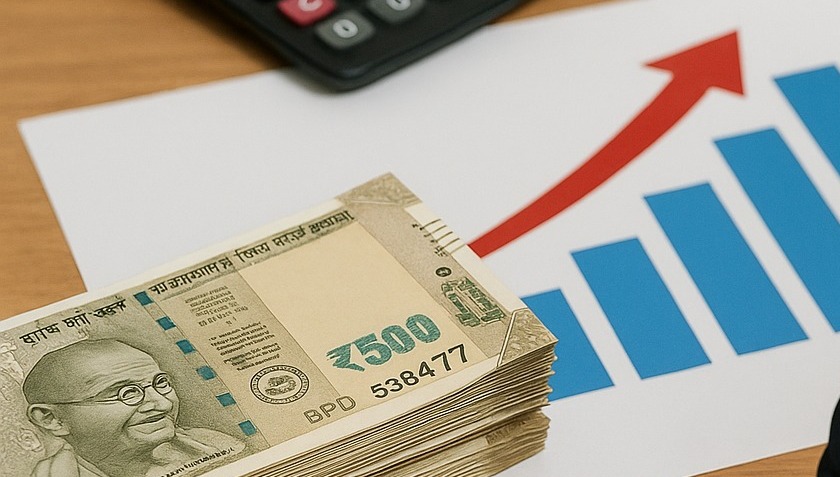
The Goods and Services Tax (GST) collection made history in April when it reached an all-time high with a whopping Rs 2.37 lakh crore. This is a 12.6% year-on-year increase, primarily pushed by strong domestic and import transactions. The collection from domestic transactions rose to Rs 1.9 lakh crore and import transactions to Rs 46,913 crore.
About GST
- Goods and Services Tax (GST) was designed by the government to replace many indirect taxes, such as excise duty, VAT, and services tax, with a single indirect tax regime.
- The newly drafted GST Act was implemented on 1st July, 2017 in the country.
- This multi-stage and destination-based tax system levies tax on every transaction of goods and services. Tax is collected from the manufacturers as well as the consumers. Consumers pay the tax to the businesses that is transferred to the government.
- During the interstate transaction of goods and services, an Integrated GST is collected that includes the Central GST and State GST.
- The tax rates are decided by the Union and State governments after a detailed discussion and final consensus.
- The GST council decides the tax slab to be applied on a particular good or service.
About GST Council
- GST Council is a constitutional body that is chaired by the Union Finance Minister. It also includes the Union Minister of State, in charge of revenue and finance, and the Minister in charge of finance or taxation, or other ministers nominated by each state.
- The GST Council is formed by the President of India as per the provisions of Article 279A.
- The centre has 1/3rd voting power while the states have 2/3rd voting weightage. The decisions are made with a 3/4th majority.
- The Council provides solutions to matters that hinder smooth GST execution in the country. Besides, it also suggests modifications if required to make the process seamless for taxpayers and other stakeholders.
Indirect Tax
- Indirect taxes are those that are not directly collected from the person or businesses the tax is levied upon. But, it is collected at one point or by one entity, such as a manufacturer or retailer, when goods or services are purchased.