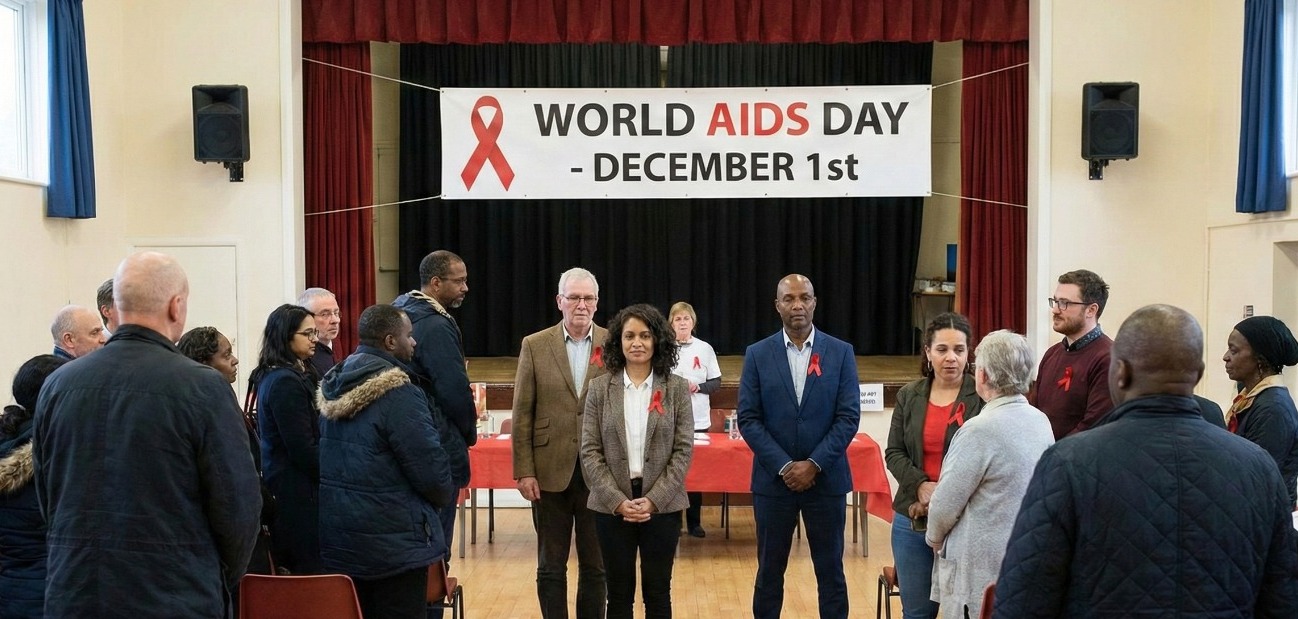
The world today observes World AIDS Day, marked every year on 1st December to raise global awareness about HIV prevention, treatment access and the ongoing fight against stigma and discrimination. This year’s theme, “Overcoming disruption, transforming the AIDS response,” highlights the vital role of community networks, frontline health workers, civil society groups and youth-led initiatives in driving progress toward ending AIDS by 2030.
Across India, the day is being observed through nationwide awareness campaigns, red ribbon events, school and college outreach programmes, health camps, and community mobilisation efforts. These initiatives are led by the National AIDS Control Organisation (NACO) under the Ministry of Health and Family Welfare, in partnership with State AIDS Control Societies and various NGOs.
About AIDS
- Acquired Immunodeficiency Syndrome (AIDS) is a chronic, life-threatening condition caused by the Human Immunodeficiency Virus (HIV), which attacks and weakens the body’s immune system.
- If untreated, HIV progressively destroys key immune cells, leaving individuals vulnerable to infections and certain cancers.
- While there is currently no cure for AIDS, advancements in antiretroviral therapy (ART) have transformed HIV into a manageable condition, enabling people to live long, healthy lives. Early diagnosis, consistent treatment, awareness, and prevention strategies remain central to controlling the spread of HIV/AIDS globally.
About the World AIDS Day
- World AIDS Day, observed every year on 1 December, is a global initiative dedicated to raising awareness about HIV/AIDS, supporting people living with the virus, and remembering those who lost their lives to the disease.
- Established in 1988, it was the first-ever international health day and continues to serve as a powerful reminder of the ongoing fight against HIV.
- The day mobilizes governments, communities, and individuals to strengthen prevention efforts, expand access to treatment, and eliminate stigma and discrimination, which are key steps toward achieving an AIDS-free world.
AIDS situation in India
- India has made notable strides in its HIV response over the past decade. According to NACO, the country has recorded a 46% decline in new HIV infections and a 73% reduction in AIDS-related deaths since 2010.
- Wider access to testing services, free antiretroviral therapy (ART), targeted interventions for high-risk populations and long-term stigma-reduction campaigns have contributed significantly to this progress.
- In India, over 2.5 million people were living with HIV by 2023.
- As of 2024, approximately 40.8 million people worldwide were living with HIV, the virus that causes AIDS.